
Accessing dedicated specialist gynecological care close to home allows women in Wentworthville and throughout the Cumberland and Western Sydney regions to receive timely investigation, diagnosis, and management for acute and chronic reproductive health concerns. From preventive cervical screenings and routine checkups to specialized assessments for complex menstrual disorders, pelvic pain, and structural reproductive conditions, local clinical services focus on individualized treatment plans tailored to each patient’s stage of life.
Thank you for reading this post, don't forget to subscribe!Comprehensive Gynecological Care for Wentworthville Patients
Gynecological services support women across adolescence, the reproductive years, perimenopause, and postmenopause. Care pathways prioritize clear communication, patient comfort, and evidence-based decision-making. Whether addressing persistent symptoms that have failed to respond to primary care therapies or seeking second opinions regarding elective surgical interventions, patients can expect collaborative consultations that balance conservative medical management with advanced surgical options when necessary.
Conditions Evaluated and Managed
Specialist consultations provide thorough diagnostic workups and long-term care plans for a wide array of female reproductive disorders, including:
- Abnormal and Heavy Uterine Bleeding: Investigating prolonged menses, irregular cycles, post-coital spotting, and postmenopausal bleeding to rule out underlying pathology such as polyps, endometrial hyperplasia, or malignancy.
- Endometriosis and Adenomyosis: Identifying and treating chronic pelvic pain, painful periods (dysmenorrhea), and painful intercourse (dyspareunia) through coordinated hormonal therapies and minimally invasive excisional surgery.
- Uterine Fibroids: Managing symptomatic leiomyomas causing pelvic pressure, urinary frequency, heavy menstrual bleeding, or reproductive difficulties through medical suppression or surgical removal (myomectomy or hysterectomy).
- Polycystic Ovary Syndrome (PCOS): Addressing cycle irregularity, metabolic concerns, hyperandrogenism symptoms, and ovulatory dysfunction in coordination with multidisciplinary allied health providers.
- Pelvic Organ Prolapse: Diagnosing uterine, bladder, or bowel descent and providing non-surgical support (such as pessary fittings) alongside reconstructive pelvic floor surgical options.
- Cervical Dysplasia: Evaluating abnormal Cervical Screening Test (CST) results, persistent high-risk Human Papillomavirus (HPV) detections, and pre-cancerous cellular changes.
- Menopause and Perimenopause Management: Formulating individualized hormone replacement therapy (HRT) or non-hormonal alternatives to relieve vasomotor symptoms, sleep disturbances, and genitourinary syndrome of menopause.
Diagnostic Testing and In-Clinic Procedures
To reduce delays between initial evaluation and treatment, several minor investigations and interventions can often be coordinated directly within the clinic setting or scheduled through regional imaging partners:
- Colposcopy and Directed Biopsies: A detailed, magnified examination of the cervix, vagina, and vulva following an abnormal cervical screening, enabling targeted tissue sampling to accurately evaluate epithelial changes.
- Endometrial Sampling: In-office pipelle biopsies performed to assess the lining of the uterus in cases of abnormal or postmenopausal bleeding, minimizing the immediate need for general anesthesia.
- Intrauterine Device (IUD) Insertion and Removal: Accurate placement and retrieval of hormonal and copper contraceptive or therapeutic intrauterine systems for contraception and heavy menstrual bleeding control.
- Specialized Pelvic Imaging Referrals: Direct coordination with high-resolution pelvic ultrasound and magnetic resonance imaging (MRI) units across Western Sydney for deep infiltrating endometriosis mapping and structural assessments.
Referral Pathways and Consultation Preparation
To ensure continuity of care and claim eligible Medicare rebates, obtaining a valid referral from a general practitioner or primary care medical center before your visit is standard practice. A referral from a GP typically remains valid for 12 months, whereas a specialist-to-specialist referral is valid for three months.
To maximize the clinical value of your initial appointment, bring relevant documentation, including past operative reports, pathology records, recent blood tests, and imaging disc copies or access codes (such as pelvic ultrasounds or CT scans). Maintaining a brief menstrual and symptom diary detailing dates, bleeding patterns, pain severity, and current medications helps your specialist form a comprehensive assessment.
Access and Transit from Wentworthville
Patients traveling from Wentworthville benefit from established regional transport connections across the central Cumberland corridor. The precinct offers convenient road access via the Great Western Highway, Cumberland Highway, and the M4 Western Motorway, linking neighboring suburbs such as Westmead, Parramatta, South Wentworthville, and Pendle Hill.
For those relying on public transit, Wentworthville railway station provides regular T1 Western Line and T5 Cumberland Line services, alongside local bus networks connecting residential streets directly to major medical and commercial hubs. Commuter parking and dedicated clinical parking bays are typically located in close proximity to local health facilities, ensuring smooth access for patients attending physical examinations or follow-up appointments.
Frequently Asked Questions
Do I need a referral from a GP before making an appointment?
Yes, obtaining a referral from your general practitioner is necessary to claim the appropriate specialist consultation rebates through Medicare and ensures seamless clinical communication between your primary doctor and your gynecologist.
What should I bring along to my first gynecological consultation?
Please bring your valid GP referral letter, Medicare card, private health insurance details (if applicable), a list of current medications and allergies, and physical copies or access tokens for any recent pelvic ultrasounds, blood work, or previous surgical reports.
Are Medicare rebates available for specialist consultations and testing?
Medicare rebates apply to initial and follow-up consultations as well as specific diagnostic procedures such as colposcopies and biopsies, provided you hold an active referral from an Australian registered medical practitioner.
What happens during an initial gynecological assessment?
Your specialist will conduct an in-depth review of your medical and reproductive history, evaluate your symptoms, discuss any previous test findings, and perform a gentle physical examination or cervical assessment only when clinically indicated and with your informed consent.
How accessible is the practice from Wentworthville station and local bus routes?
Consulting suites serving the Wentworthville area are conveniently reachable via local Cumberland bus routes and the T1 and T5 rail networks at Wentworthville station, with nearby parking options available for patients arriving by car.
Where are surgical procedures performed if my condition requires an operation?
If your condition necessitates operative management, such as advanced laparoscopy or hysteroscopy, procedures are scheduled at fully accredited private or public hospital surgical centers within the greater Western Sydney medical network.
Gynaecological Services Wentworthville
Ultrasound for Women provides Gynaecological Services to people within Wentworthville. We ensure women have access to the best possible reproductive healthcare. All procedures, regardless of purpose or function, are executed with the highest levels of care and dignity.
Our team is highly qualified and can help you get the level of service that you need.
Gynaecological/Pelvic Scan
One of our many gynaecological services Wentworthville is our pelvic scan. This looks at your uterus and ovaries to help investigate the cause of pain or abnormal bleeding. This can be done either through taking images through your stomach, but in sexually active women, a transvaginal scan can be done to get a high quality image. A Wentworthville transvaginal scan involves placing a sterilised ultrasound probe, covered in a disposable sheath inside the vagina.
If the lining cannot be seen in the transvaginal scan, then a saline sonogram (sonohysterogram) may be used.

What Should I Know Before My Appointment?
Before you go for your Wentworthville Pelvic Scan, it’s important to remember:
- Try to book this scan in the first half of your menstrual cycle
- Drinking prior to the scan is not generally necessary
- Transvaginal scan is not necessary if you are not sexually active or if your doctor has requested us not to do it
- If you specifically want a female to do your examination, let us know at the time of your booking

Sonohysterogram
A Wentworthville Sonohysterogram is similar to a transvaginal scan but is used to examine the endometrial lining of the womb.
This process is similar to a pap smear where the doctor passes a fine tube and saline solution into the cervix. When this happens, the internal wall of the womb slightly separates, making it easier to see polyps and fibroids which may be growing. It may also help to identify any unusual womb shapes that may increase the risk of pregnancy complications and miscarriages in the future.
Tubal Patency Scan
If a woman is having problems falling pregnant, a tubal patency scan Wentworthville is used in combination with an ovulation test and a sperm analysis can be done to determine any potential causes of infertility, if any.
Similar to a pap smear, a fine plastic tube is passed through the cervix and scanned with a sterile probe covered in a disposable sheath. After, a fluid solution is injected through the plastic tube. The doctor will then monitor the fluid in the ultrasound to see if there is any blockages.

What Should I Know Before My Appointment?
Before you go for your Wentworthville Tubal Patency Scan, it’s important to remember:
- Arrange help or time off work on the day of your test
- We recommend taking Naprogesic or Ponstan tablets 1 hour before the scan as it can cause period-like pains
- Book your test within 1 week of finishing your period

Ovarian Cancer Screening
An ovarian cancer screening Wentworthville is beneficial for women over the age of 50 who have a family history of breast and ovarian cancer to check for suspicious ovarian cysts. A transvaginal ultrasound combined with a doctor’s clinical assessment and blood tests can be used to track women at risk of ovarian cancer.
During the ultrasound, we can identify ovarian cysts that are a low chance of being cancerous, those that are a moderate risk and those that are high risk. Testing is recommended every year for high-risk women.
Endometriosis Screening
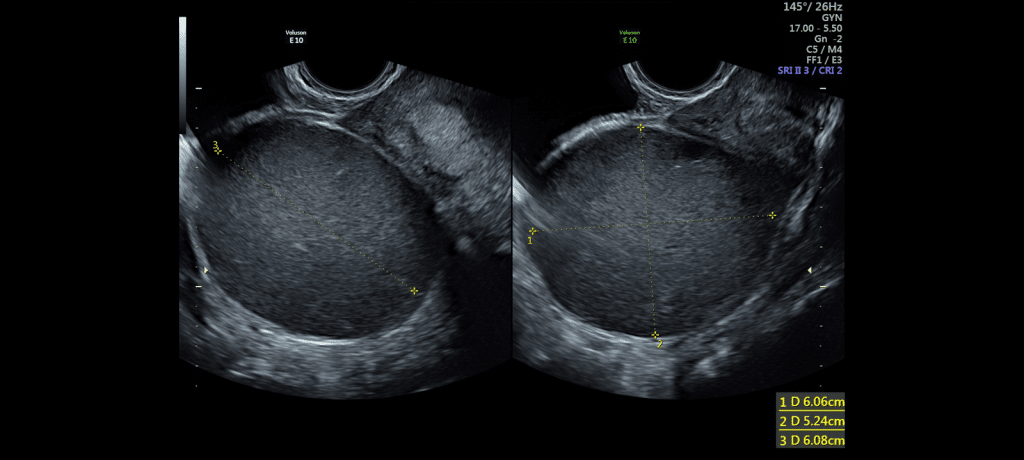
Endometriosis affects 1 in 10 young women and is caused by the growth of endometrial glands outside of the womb, usually on or in ovaries, the back of the uterus on the pelvic walls and on the bowel. A Wentworthville endometriosis screening can help see the endometriotic cysts in the ovaries or look for deep infiltrative endometriosis.

Mirena IUCD
A Mirena IUCD is a contraceptive device that has a slow-release form of the progesterone hormone. It causes a thinning of the lining in the womb, reducing the number of periods and making it difficult to fall pregnant. One of our Mirena IUCD Wentworthville Specialists is able to perform the procedure or replace your current Mirena IUCD.
Our team of highly trained and qualified staff are able to help you with any Gynaecology Services Wentworthville you may need. Our Parramatta office is located at Level 4, 17 Macquarie Street Parramatta and is open Monday to Friday. Make an appointment with our team today!